
Product Overview
The Industrial Baghouse Dust Collector is an engineered particulate filtration system designed to capture dry dust from industrial processes, helping manufacturers control airborne emissions and recover valuable product generated during material handling, processing, and production.
The unit operates on an external filtration mechanism. Particle-laden process gas enters the housing, where particulate matter is retained on the outer surfaces of industrial filter bags while cleaned gas passes into the upper clean-air chamber and exits through the outlet plenum.
An automated online pulse-jet cleaning system utilizes brief, high-pressure compressed air pulses to dislodge accumulated dust cake from the filter media without interrupting the continuous filtration cycle. Dislodged material falls by gravity into the lower hopper for continuous discharge.
Engineered for integration into heavy-duty air pollution control and bulk material handling systems, the collector is configured to match specific volumetric flow rates, dust loading characteristics, operating temperatures, chemical compositions, structural layout constraints, and regulatory emission limits.
-
![Bag Filter/Bag Dust Collector]() Bag Filter/Bag Dust CollectorThe Bag Dust Collector (primarily pulse-type, with customizable back-blowing/mechanical rapping options) is a high-efficiency dry purification device specifically designed for industrial flue gas...view more
-
![Bin Vent Bag Dust Collector]() Bin Vent Bag Dust CollectorThe Bin Vent Bag Dust Collector (standard pulse type, customizable with back-blowing/mechanical rapping support) is a lightweight, high-efficiency dry purification device specifically designed for...view more


Online Pulse-Jet Cleaning
Delivers transient compressed-air pulses to continuously dislodge accumulated dust cake, maintaining stable operational pressure drop and uninterrupted production.
Application-Tailored Filter
Media Media selections include polyester, polypropylene, aramid (Nomex), PPS, P84, PTFE membrane laminates, and woven fiberglass, matched to exact thermal and chemical resistance requirements.
Flexible Dust Discharge
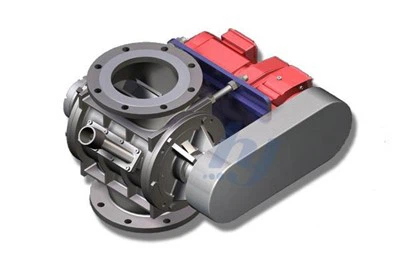
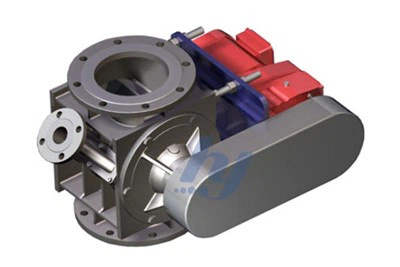
Configurations Hopper discharge interfaces can be equipped with rotary airlock valves, heavy-duty screw conveyors, or slide gates depending on material flow properties and system pressure requirements.
Scalable Airflow Capacity
Structural dimensions and total filtration area are engineered to suit specific gas volumetric flow rates, inlet dust burdens, and design filtration velocities.
Modular Casing Construction
Fabricated in transportable modular sections utilizing high-tensile fasteners and continuous gasketing to streamline international shipping and reduce on-site erection time.
Differential Pressure Regulation
Incorporates a real-time delta P transmitter and PLC controller to manage cleaning cycles dynamically based on actual cake build-up rather than fixed timer intervals.
Working Principle
Inlet and Flow Distribution
Dust-laden gas enters through the lower inlet. An internal baffle deflects coarse particles downward via inertial separation, reducing direct high-velocity dust impingement on the lower portions of the filter bags.
Particulate Filtration
Process gas flows from the outside to the inside of the fabric bags. Fine particles are retained on the exterior surface, forming a uniform filtration cake as the cycle proceeds.
Pulse-Jet Cleaning Cycle
As dust accumulates, pressure drop increases across the media. When the configured threshold is reached, the control system triggers diaphragm valves to release a high-pressure compressed air pulse through the blowpipe matrix.
Shock Wave Generation
The compressed air jet induces secondary ambient air through the venturi nozzle, creating a downward shock wave that abruptly flexes the fabric bag and shears off the accumulated dust cake.
Discharge and Exhaust
Dislodged dust slides down the steep hopper walls (greater than sixty degrees incline) into the discharge mechanism. Meanwhile, cleaned gas exits continuously through the upper outlet plenum.
Powder Processing Dust extraction at fine milling, micronizing, screening, blending, and pneumatic transfer drop-out points. Filter media and cleaning parameters are matched to particle size distribution and material cohesiveness.
Bulk Material Handling Terminals Silo venting, pneumatic conveying receiving receivers, truck and rail loading stations, and conveyor transfer points.
Cement and Aggregates Raw material crushing and screening, raw mill exhaust, clinker cooler ventilation, storage silo venting, and packaging operations.
Chemical and Mineral Processing Calciner exhaust, fertilizer granulation, mineral drying lines, and chemical powder handling operations requiring strict containment.
General Industrial Ventilation Secondary foundry emissions, woodworking extraction, grain handling facilities, and other dry particulate collection processes requiring appropriate material compatibility.

Technical Specifications
|
Parameter |
Specification Range / Basis |
Notes and Standards |
|
Handling Capacity |
5,000 to 300,000 cubic meters per hour |
Scalable per modular product series |
|
Filtration Area |
Project-specific sizing |
Calculated based on design air-to-cloth ratio |
|
Air-to-Cloth Ratio |
0.8 to 1.4 meters per minute |
Application and dust-load dependent |
|
Operating Temperature |
Up to 260 degrees Celsius standard |
Up to 400 degrees Celsius with specialized high-temp media |
|
Housing Design Pressure |
Minus 5000 Pa to plus 2000 Pa |
Internally stiffened per heavy industrial standards |
|
Compressed Air Supply |
0.5 to 0.7 MPa |
Requires oil-free, moisture-free dry instrument air |
|
Filter Bag Materials |
Polyester, Polypropylene, Nomex, PPS, P84, PTFE, Fiberglass |
Selected based on gas chemistry and dew point |
|
Cleaning Mechanism |
High-flow diaphragm pulse valves |
Integral or remote pilot configuration (1.5 inch to 3 inch) |
|
Emission Limit |
Below 10 milligrams per standard cubic meter achievable |
Verified via continuous particulate monitoring |

Housing Materials and Surface Protection Structural steel grades include Q235B structural carbon steel or corrosion-resistant stainless steel grades (SS304, SS316L) configured to match environmental exposure requirements. Carbon steel surfaces undergo grit-blasting to Sa 2.5 standard, followed by multi-coat application of high-durability anti-corrosion primer and polyurethane topcoats.
Filter Media and Thermal Management Polymer selection accounts for maximum continuous operating temperature, peak surge temperature, acid and alkali resistance, and moisture hydrolytic stability. Mineral wool insulation of 100 millimeters is clad with stucco-embossed aluminum sheeting to prevent internal acid dew point condensation.
Safety and Explosion Protection For explosive dust applications, designs incorporate explosion venting panels, explosion isolation valves, and continuous grounding straps.
Manufacturing and Quality Control
Material Verification
Incoming raw steel plates, structural shapes, and filter components are inspected against mill test certificates and engineering specifications.
Weld Inspection
Pressure-retaining housing welds and critical clean-air tube sheet joints undergo 100 percent visual examination, supplemented by dye penetrant testing on boundary seams per project quality plans.
Dimensional and Fit-Up Verification
Tube sheets are CNC-machined to maintain strict slot-to-slot tolerances (plus or minus 0.5 millimeters), preventing cage bypass and dust leakage. Major structural modules undergo pre-shipment trial assembly to verify squareness and bolt-hole alignment.
Related Products and Spare Parts
Replacement Filter Bags and Support Cages
Engineered replacement media with snap-band collars, tailored to existing baghouse dimensions, paired with galvanized or stainless steel wire cages.
Pulse-Jet Diaphragm Valves
High-flow angle valves with durable elastomer diaphragms designed for high cycle counts and rapid response times.
Rotary Airlock Valves
Precision-machined cast iron or fabricated steel rotor valves ensuring continuous material discharge under negative pressure differential.
PLC Control Cabinets
Industrial-rated enclosures integrating differential pressure transmitters, sequential timer boards, and human-machine interface touchscreens.
Frequently Asked Questions
As one of the most experienced bag dust collector/ bag filter manufacturers and suppliers in China, we offer a wide range of products with superior quality. We warmly welcome you to buy customized bag dust collector/ bag filter at competitive price from our factory. For more information, contact us now.
bag dust collector bag filter, Bin Vent Bag Dust Collector, Bag Filter Bag Dust Collector