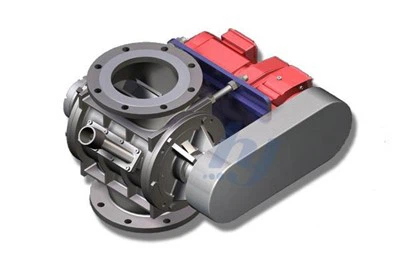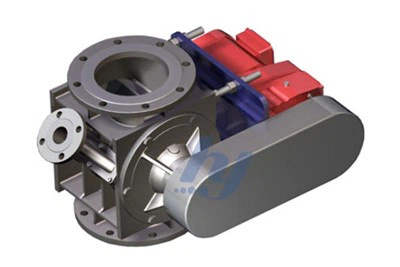


Product Overview
An industrial Slide Gate Valve is designed to control the discharge of dry bulk materials, including powders, granules, pellets, and other free-flowing solids. It is commonly installed beneath silos, hoppers, storage bins, and conveyor systems in industries such as cement, mining, agriculture, and chemical processing.
The valve uses a sliding gate blade that moves across the material flow path to open, restrict, or close the discharge opening. Depending on the valve design, gate construction, sealing arrangement, and operating conditions, it can be configured for gravity-fed material handling and selected applications involving differential pressure.
Compared with rotary or quarter-turn valve designs, a slide gate valve uses linear gate movement. The open-flow geometry depends on the valve model and installation, so the actual flow restriction and suitability for a particular material should be evaluated during product selection.
-
![Low Pressure Slide Gate Valve]() Low Pressure Slide Gate ValveThe Low Pressure Slide Gate Valve is a customized opening, closing, and shut-off control device for fluid, powder, and granular material conveying systems under low-pressure conditions. Leveraging...view more
-
![High Pressure Slide Gate Valve]() High Pressure Slide Gate ValveThe High Pressure Slide Gate Valve is a customized opening, closing, and shut-off control device for fluid, powder, and granular material conveying systems under high-pressure conditions....view more


Linear Gate Operation
The sliding gate moves across the discharge opening to control material flow. Gate dimensions, guide arrangements, and actuator selection can be configured according to the application and valve design.
Sealing Options
Depending on the required service conditions, available sealing arrangements may include resilient seats, metal seats, or adjustable packing systems. The appropriate configuration depends on the material being handled, operating temperature, differential pressure, and required leakage performance. Dust-tight or low-leakage configurations should be selected according to the specified sealing requirements and verified test conditions.
Actuation Options
Slide gate valves can be equipped with manual handwheels, pneumatic cylinders, or electric linear actuators, depending on the model and application. Automated configurations may incorporate position switches, solenoid valves, and control interfaces where supported by the selected actuator and valve design.
Wear-Resistant Components
For abrasive materials such as cement, clinker, mineral powders, and aggregates, wear-resistant gate or body components may be available as options. Material grade, hardness, and component configuration should be selected according to the material characteristics and expected operating conditions.
Customization Options
Depending on manufacturing capabilities, customization may include valve dimensions, body and gate materials, connection arrangements, sealing systems, actuator mounting, and control accessories. Final specifications should be confirmed through technical review.
Working Principle
A slide gate valve operates through the linear movement of a gate blade across the material discharge opening.
Opening and Closing
A manual or powered actuator moves the gate blade along its guides. Retracting the blade opens the discharge passage, while extending it across the opening restricts or stops the material flow.
Material Flow Control
When the gate is open, material passes through the available discharge opening under the influence of gravity or the applicable process conditions. Actual flow capacity depends on the valve opening, material particle size, bulk density, moisture content, and upstream equipment.
Sealing
When the gate reaches the closed position, the selected seating and packing arrangement limits leakage around the gate and body interfaces. The achievable sealing performance depends on the valve construction, material properties, operating conditions, and specified acceptance criteria. For applications involving fine powders or pressure differentials, additional sealing arrangements or purge connections may be considered if supported by the valve design.
Applications
Cement and Building Materials
Slide gate valves can be used at cement silos, fly ash storage hoppers, raw material bins, and packing system feed points. Wear-resistant configurations may be considered where abrasive particles cause accelerated component wear.
Mining and Mineral Processing
Typical applications include dry ore handling, mineral concentrate storage, transfer chutes, and bulk solids discharge systems. For wet tailings or abrasive slurry service, a suitable slurry-rated valve should be evaluated rather than assuming that a standard dry-material slide gate is appropriate.
Agriculture, Grain, and Feed
Depending on the material and equipment design, slide gate valves may be installed beneath grain bins, feed ingredient hoppers, flour storage systems, and batching equipment. Food-contact applications require confirmation of material suitability, cleanability, and applicable regulatory requirements.
Chemical and Plastics Processing
Slide gate valves may be used for handling compatible polymer pellets, powder additives, fillers, and other dry bulk materials. Body and seal materials should be selected according to chemical compatibility, temperature, and process requirements.
Technical Specifications
The following table identifies the main parameters to confirm during selection. Final values should be taken from the approved product data sheet for the selected model.
|
Technical Parameter |
Specification / Selection Basis |
|
Valve Type |
Slide gate valve; configuration subject to application |
|
Nominal Size |
To be confirmed according to available models and required opening dimensions |
|
Body Material |
Options may include carbon steel or stainless steel, subject to actual product availability |
|
Gate Material |
Selected according to material characteristics, wear requirements, and operating conditions |
|
Seat Type |
Resilient seat, metal seat, or other available configuration |
|
Seal Material |
Selected according to media compatibility and operating temperature |
|
Operating Pressure / Differential Pressure |
To be confirmed for the specific valve model and pressure direction |
|
Operating Temperature |
To be confirmed according to body, seat, packing, and actuator limitations |
|
Actuation |
Manual handwheel, pneumatic cylinder, or electric linear actuator, subject to model availability |
|
Connection Type |
To be confirmed according to the valve design and installation requirements |
|
Control Accessories |
Position switches, solenoid valves, and other compatible accessories, where available |
|
Surface Treatment |
To be confirmed according to body material, environmental exposure, and coating requirements |
Material Selection
Body, gate, seat, and packing materials should be selected according to the intended service conditions. Where required and available, material certificates can be requested to verify the specified material grade and documented material properties.
Fabrication and Machining
Depending on production capabilities and the selected model, fabrication may involve cutting, forming, welding, machining, and surface preparation. Machining requirements should be defined by approved drawings and tolerances. Guide alignment, gate clearance, flange dimensions, and sealing interfaces should be checked against applicable design specifications.


Inspection and Testing
Inspection and testing should follow agreed technical requirements and procedures. Depending on the valve design and order specifications, these activities may include visual inspection of fabrication and assembly, dimensional inspection against approved drawings, verification of gate movement and operating stroke, functional testing of the valve and supplied actuator, seat leakage or pressure testing where applicable to the design, and inspection of coating or surface treatment when specified.
The availability of test reports, material certificates, dimensional records, and other quality documents should be confirmed before ordering.
OEM and Custom Engineering
For OEM projects and bulk material handling systems, customization may be considered for dimensions, connection arrangements, materials, actuator selection, and accessories, subject to engineering review. To evaluate a custom requirement, provide the application description, installation drawing, operating conditions, required quantity, and any project-specific standards or inspection requirements.
Related Products & Spare Parts
To complete your material handling circuit, consider pairing slide gate valves with compatible upstream and downstream components:
Rotary Airlock Feeders: For controlled feeding or discharge beneath silos and hoppers, subject to material and process requirements.
Flexible Connections: For installations requiring a flexible interface between connected equipment, where compatible with process conditions.
Knife Gate Valves: For selected slurry or solid-laden liquid applications when a suitable valve design is specified.
Replacement Gate Blades: For maintenance or replacement according to the original valve model.
Seal and Packing Kits: Selected according to the valve configuration and service conditions.
Actuation and Control Accessories: Compatible pneumatic, electric, and position-feedback components where available.
Frequently Asked Questions
As one of the most experienced slide gate valve manufacturers and suppliers in China, we offer a wide range of products with superior quality. We warmly welcome you to buy customized slide gate valve at competitive price from our factory. For more information, contact us now.
High Pressure Slide Gate Valve, knife gate valve, Low Pressure Slide Gate Valve