
Product Overview
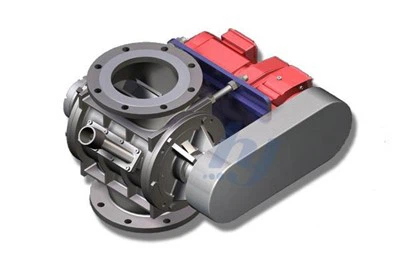
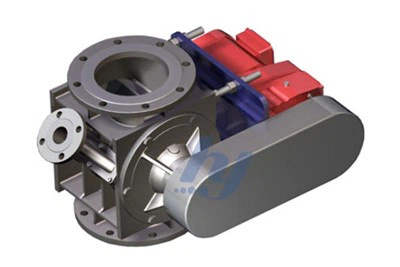
An industrial conveying diverter valve directs powders, granules, and pellets from an incoming pipeline to selected downstream lines in pneumatic conveying systems. It is used in bulk material handling applications where controlled material routing is required between processing, storage, blending, and packaging equipment.
Depending on the valve design, the diverter can use a rotary transfer element or a pivoting flap to change the material flow path. The valve configuration, sealing arrangement, body material, and actuation method should be selected according to the conveyed material, operating pressure or vacuum, temperature, and pipeline layout.
Industrial conveying diverter valves can be configured for applications in plastics processing, chemical manufacturing, food ingredient handling, and mineral processing. The appropriate design depends on the required flow path, material characteristics, process conditions, and cleaning requirements.
-
![Ball Type Diverter Valve]() Ball Type Diverter ValveThe Ball-type Diverter Valve is a core fluid/particle switching device specifically designed for multi-pipe media control scenarios. Leveraging the company's years of experience in valve...view more
-
![Plug Type Diverter Valve]() Plug Type Diverter ValvePlug Type Diverter Valve is a core pipeline switching device customized for solid material (powder, granular material, powder-granular mixture) conveying systems. Based on the company's years of...view more
-
![Wye Line Diverter Valve]() Wye Line Diverter ValveWye Line Diverter Valve is a core pipeline switching device customized for solid materials (powder, granules, powder-granule mixtures) and some fluid media conveying systems. Based on the...view more
-
![Multi-Way Diverter Valve]() Multi-Way Diverter ValveThe Multi-Way Diverter Valve is an integrated flow and direction control core device customized for multi-actuator and complex piping systems. Leveraging the company's years of experience in valve...view more
-
![Pendulum Diverter Valve]() Pendulum Diverter ValveThe Pendulum Diverter Valve is a high-efficiency reversing control device specifically designed for fluid, powder, and granular material conveying systems. Leveraging the company's years of...view more


Flexible Flow Routing
Available flow configurations can direct material between designated pipeline branches. The required number of outlets and switching positions should be confirmed when selecting a valve.
Sealing Options
Different sealing arrangements are available depending on the valve design and process requirements. Seal selection should account for material compatibility, operating temperature, pressure differential, and the required level of separation between conveying lines.
Material-Compatible Internal Desig
The internal flow path and contact materials can be selected according to the characteristics of the conveyed product. For plastic pellets and other granular materials, the valve geometry should be evaluated for particle impact, abrasion, and potential material retention.
Pneumatic or Electric Actuation
Actuation options can be selected according to the plant control system and operating requirements. Pneumatic configurations may include solenoid valves and position feedback switches, subject to the selected model.
Maintenance Access
Where supported by the design, accessible covers and replaceable sealing components can facilitate inspection and maintenance. Access arrangements and replacement procedures should be confirmed for the selected valve model.
Working Principle
The operating principle depends on the internal design of the diverter valve. Rotary and flap-type configurations should be evaluated separately because their flow paths, moving components, and sealing arrangements differ.
Rotary-Type Diverter Valve
In a rotary design, an internal transfer element changes position to connect the inlet with the selected outlet. The internal passage geometry and sealing arrangement determine how material is routed and how effectively the inactive flow path is isolated.
Flap-Type Diverter Valve
In a flap-type design, a movable flap changes position to direct material toward the selected outlet. The suitability of this arrangement depends on the material properties, pipeline configuration, pressure conditions, and required sealing performance.
Actuation and Position Monitoring
Where automatic actuation is provided, a control signal operates the actuator to change the valve position. Optional position switches can transmit feedback to a programmable logic controller (PLC), subject to the selected control configuration.
Plastics and Polymer Processing: Used to route plastic resin pellets between conveying lines, storage silos, blending equipment, and packaging stations. Selection should consider pellet size, material sensitivity, conveying velocity, and the potential for abrasion or particle damage.
Food Ingredient and Starch Processing: Used for routing powders, granules, and other bulk ingredients between processing stages. Applications requiring hygienic design should specify suitable contact materials, surface finishes, cleaning procedures, and any applicable food-contact requirements.
Chemical Processing: Used in powder handling systems to direct compatible chemical materials between storage, mixing, and processing equipment. Material compatibility, containment requirements, and operating conditions should be confirmed for each application.
Mineral and Abrasive Material Handling: Used in conveying systems handling selected mineral powders and abrasive bulk solids. Body materials, internal wear protection, and sealing arrangements should be selected according to the material's abrasiveness and operating conditions.
Pharmaceutical Powder Handling: Potential applications include routing powders between designated process stages. Suitability for pharmaceutical use must be assessed against the required containment level, cleanability, contact materials, and applicable regulatory requirements.

Technical Specifications
The following table identifies the principal selection parameters. Final values must be confirmed against the actual model range and approved technical documentation.
|
Parameter |
Specification / Selection Options |
|
Valve Type |
Rotary-type or flap-type, subject to product availability |
|
Flow Configuration |
2-way, 3-way, or 4-way, where available |
|
Nominal Pipe Size |
Confirm available sizes and connection dimensions |
|
Body Material |
Specify available grades, such as aluminum, carbon steel, or stainless steel |
|
Internal Component Material |
Confirm material grade and optional wear-resistant treatment |
|
Seal Material |
Select from available materials based on media compatibility and temperature |
|
Operating Pressure |
Confirm model-specific positive-pressure rating |
|
Operating Vacuum |
Confirm model-specific vacuum rating |
|
Operating Temperature |
Confirm the permitted range for the complete valve configuration |
|
Actuation |
Pneumatic or electric, where available |
|
Pneumatic Supply Pressure |
Confirm the required actuator supply pressure |
|
Position Feedback |
Confirm switch type, voltage, output signal, and enclosure rating |
|
Pipeline Connection |
Specify flange, clamp, or other available connection type and applicable standard |
|
Control Interface |
Confirm solenoid valve, wiring, and PLC integration requirements |
Customization & Manufacturing Quality
Material and Configuration Selection
Valve configuration can be specified according to the conveying medium, particle size, bulk density, abrasiveness, operating temperature, pressure or vacuum, and required flow path.
Body and internal component materials should be selected according to the application. Any special alloy, wear-resistant treatment, or process-contact requirement should be confirmed for availability and compatibility with the intended service.
Surface Finish and Wear Protection
Internal surface finish and wear protection should be selected according to the conveyed material and process requirements. Where available, suitable options may include specified surface finishing or wear-resistant treatments.
Food-contact or pharmaceutical applications require additional verification of surface finish, cleanability, material suitability, and relevant compliance documentation.
Inspection and Testing
Inspection and testing requirements should be defined according to the valve design, operating conditions, and applicable manufacturing or customer specifications.
Depending on the product and agreed requirements, relevant checks may include dimensional inspection, actuator function testing, and leakage or pressure testing using an appropriate documented procedure.
Any claim regarding specific test pressures, acceptance criteria, material test reports, or compliance with an industry standard should be supported by actual records and documentation.
Related Products & Spare Parts
Rotary Airlock Valves
Used in suitable bulk material handling systems for controlled discharge from equipment such as hoppers, cyclones, and dust collectors.
01
Pinch Valves
Used for isolation or flow control in compatible applications involving slurries, powders, or other process media.
02
Replacement Seal Kits
Replacement sealing components selected for the relevant valve model and operating conditions.
03
Solenoid Valves and Control Accessories
Components for pneumatic actuation and automated valve operation, subject to system compatibility.
04
Position Switches
Accessories for valve position feedback and integration with plant control systems.
05
Frequently Asked Questions
As one of the most experienced conveying diverter valve manufacturers and suppliers in China, we offer a wide range of products with superior quality. We warmly welcome you to buy customized conveying diverter valve at competitive price from our factory. For more information, contact us now.
Ball Type Diverter Valve, conveying diverter valve, diverter valve