
Product Overview
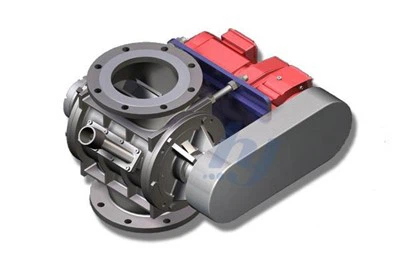
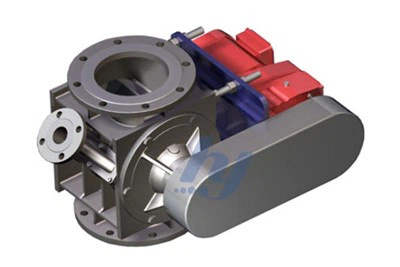
A Gravity Diverter Valve is an industrial bulk material handling valve designed to redirect dry solids from a common inlet to one of two discharge outlets, depending on the valve configuration. It is used in gravity-fed processing systems where dry powders, granules, and pellets must be routed between storage vessels, processing equipment, or packaging lines.
The valve uses an internal diverter blade or switching element to change the material flow path. Depending on the design, it can be supplied with manual, pneumatic, or electric actuation to suit different operating and control requirements.
Selection depends on material characteristics, flow conditions, operating temperature, pressure differential, required sealing performance, and installation dimensions.
-
![Flap Diverter Valve]() Flap Diverter ValveHanye Flap Diverter Valve is a smooth reversing control device customized for fluid, powder, and granular material conveying systems. Leveraging the company's years of experience in valve...view more
-
![Double Knife Diverter Valve]() Double Knife Diverter ValveThe Double Knife Diverter Valve is a high-precision reversing control device specifically designed for fluid, powder, and granular material conveying systems. Leveraging the company's years of...view more


Key Features & Benefits
Flow Direction Control: The internal diverter mechanism redirects bulk solids between the available discharge outlets. The actual flow path and switching arrangement depend on the valve design.
Configurable Sealing Options: Different sealing arrangements are available depending on the required level of material separation, operating conditions, and process requirements. Leakage and material carryover performance are engineered to match the selected configuration.
Material and Wear Options: Housing and internal components can be specified according to the application. Carbon steel and stainless steel are available for different process environments, while wear-resistant liners can be evaluated for abrasive bulk solids.
Flexible Actuation: Depending on the model, actuation options include manual operation, pneumatic cylinders, or electric actuators. Automated configurations are designed for integration with plant control systems.
Installation Compatibility: Inlet and outlet connections can be selected according to the equipment layout. Flange dimensions, drilling patterns, face-to-face dimensions, and mounting arrangements are verified prior to manufacturing.
Application-Specific Configuration: The valve configuration is selected according to the handled material, temperature, pressure conditions, cleaning requirements, and installation constraints.
Working Principle
A gravity diverter valve redirects bulk material by changing the position of an internal switching element.
Position A: Material Discharge to Outlet A
The diverter blade is positioned to establish the flow path toward Outlet A. Material entering through the inlet travels toward the selected discharge outlet under the available gravity head.
Switching Operation
When a change in discharge direction is required, the actuator or manual mechanism moves the diverter blade to the alternative position. Switching time, permissible operating conditions, and whether the valve can change position while material is flowing depend on the specific design.
Position B: Material Discharge to Outlet B
The diverter blade moves to the position that directs material toward Outlet B. The resulting flow path and degree of separation between the outlets depend on the internal geometry and sealing arrangement.
Control and Position Feedback
For automated installations, limit switches or proximity sensors indicate the valve position. Electrical interfaces, control signals, and PLC compatibility are aligned with the selected actuator and control arrangement.
Plastics and Polymer Processing: Used to route plastic pellets, granules, or polymer powders between silos, hoppers, mixers, and downstream processing equipment. Material characteristics and internal geometry are evaluated to prevent particle damage, bridging, or material carryover.
Food and Feed Processing: Suitable for grain, flour, sugar, starch, and feed ingredients. Contact materials, seal compounds, surface finish, and cleaning methods are evaluated to meet food-processing requirements.
Chemical and Mineral Processing: Used to direct dry powders, pigments, granular minerals, and other bulk solids through vertical process lines. Chemical compatibility, abrasion resistance, and dust containment are prioritized during selection.
Wood and Biomass Processing: Applied for sawdust, wood pellets, and biomass materials. Particle size distribution, moisture content, flow behavior, and abrasion guide the selection of the valve configuration.

Technical Specifications
The following table identifies the main specification categories for product selection. Numerical ratings and available configurations are confirmed against technical drawings and data sheets.
|
Parameter |
Specification / Selection Requirement |
|
Product Type |
Gravity diverter valve |
|
Flow Arrangement |
Common inlet with two discharge outlets |
|
Nominal Size |
Available sizes confirmed for the selected model |
|
Housing Material |
Carbon steel or stainless steel grades |
|
Internal Components |
Blade material and optional wear-resistant plates |
|
Seal Material |
Selected according to temperature, media compatibility, and sealing requirements |
|
Operating Pressure |
Rated pressure and allowable differential pressure |
|
Operating Temperature |
Complete valve assembly temperature rating |
|
Actuation |
Manual, pneumatic, or electric, subject to model availability |
|
Position Feedback |
Limit switches or proximity sensors |
|
Connections |
Flange standard, dimensions, drilling pattern, and interface requirements |
|
Installation |
Mounting orientation and available installation dimensions |
|
Testing |
Inspection and test procedures for the selected model |
Configuration and Selection Guide
Selecting a gravity diverter valve requires evaluating process conditions and required operating behavior before confirming a model.
Material Characteristics
Identify the material being handled, including particle size, bulk density, abrasiveness, moisture content, flow behavior, and chemical or hygienic requirements.
Operating Conditions
Specify available gravity head, operating pressure, differential pressure, material temperature, ambient temperature, and whether switching occurs during material flow or between batches.
Sealing Requirements
Define whether the process requires basic flow separation, reduced material carryover, dust containment, or a defined leakage limit. Performance requirements are aligned with applicable test criteria.
Actuation and Control
Choose the actuation method based on operating frequency, available utilities, control system requirements, and the intended operating sequence.
Installation Dimensions
Provide inlet and outlet sizes, flange standards, available installation space, mounting orientation, and existing equipment drawings.
Material and Surface Requirements
Identify whether carbon steel, stainless steel, special internal materials, specific surface finishes, or seal compounds are required for food-contact, chemical compatibility, or high-temperature service.

Customization and manufacturing arrangements are confirmed against production capabilities and the requirements of the selected valve.
Material Selection: Housing, internal components, and seals are specified according to process conditions and available product configurations. Material grades and compatibility are documented.
Machining and Assembly: Manufacturing operations include housing fabrication, machining of connection surfaces, internal component production, actuator installation, and final assembly. Dimensional tolerances are maintained in accordance with approved drawings.
Surface Treatment: Coating, blasting, polishing, or other surface treatments are selected according to specified materials, service environments, and process requirements.
Inspection and Testing: Inspection and testing follow documented procedures, including dimensional checks, functional operation checks, actuator checks, and sealing or leakage tests where applicable.
OEM and Custom Configurations: For projects requiring non-standard dimensions, special materials, alternative actuators, or control interfaces, technical drawings and operating conditions are reviewed during the quotation stage.
Related Products and Spare Parts
Depending on the process layout, the following equipment and components are available for bulk material handling systems:
Rotary Airlock Valves
Used in applications requiring controlled material feeding and airlock functions.
01
Pinch Valves
Used in applications involving flow control of compatible media.
02
Replacement Seals and Gaskets
Selected according to the installed valve model, seal material, and operating conditions.
03
Position Sensors and Limit Switches
Used for valve position feedback and control arrangements.
04
Actuator Components
Replacement parts selected according to the actuator make, model, and installed configuration.
05
Frequently Asked Questions
As one of the most experienced gravity diverter valve manufacturers and suppliers in China, we offer a wide range of products with superior quality. We warmly welcome you to buy customized gravity diverter valve at competitive price from our factory. For more information, contact us now.
gravity diverter valve, Flap Diverter Valve, Double Knife Diverter Valve