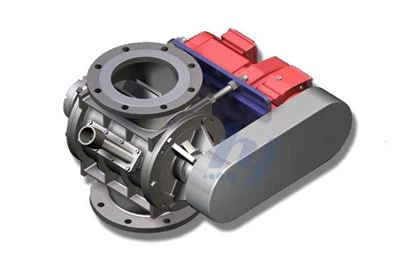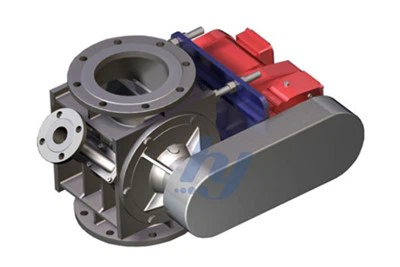

The Feasibility of Gas Flow Through Diverter Valves
Fundamentally, a flow-dividing and combining valve serves as a flow distribution device; its ability to handle gas depends entirely on its specific design. Much like a drinking straw can be used to both sip juice and blow bubbles, most diverter valves can be adapted to handle gaseous media through structural modifications. Three key factors determine this capability:
Sealing Materials: Oil-resistant rubber is suitable for liquids, whereas gases require low-permeability materials such as polyurethane.
Spool Clearance: Gas control applications demand a spool clearance precision that is at least 30% higher than that required for liquids.
Pressure Compatibility: The operating pressure for gas systems is typically only one-fifth to one-third of that required for liquid systems.
Specific Requirements for Gas Control
To ensure a diverter valve operates stably with gas, the following details must not be overlooked:
Leak-Prevention Design: Since gas molecules are smaller, a multi-stage sealing structure is required to prevent leakage.
Response Speed: Due to the compressibility of gases, the valve spool's actuation speed must be increased by 20% to 40%.
Filtration System: A filter element with a rating of 1μm or finer is essential to prevent dust particles from jamming the precision-machined valve spool.
Typical Application Scenarios
Gas-compatible diverter valves excel in the following fields:
Food Packaging: Synchronously controlling multiple nitrogen-flushing lines for food preservation.
Medical Oxygen Supply: Precisely distributing oxygen flow to ICU patient beds.
Pneumatic Systems: Balancing the pneumatic supply across multiple actuators or pneumatic components.