
For powder and bulk‑material handling projects, selecting a tubular chain conveyor manufacturer is more than finding a supplier that can deliver equipment and quotations.
Tubular chain conveyors require custom design based on material characteristics, conveying distance, lifting height and production‑line layout. Even if two manufacturers offer equipment with the same pipe diameter, notable differences may exist in actual conveying capacity, operational stability, service life of wear‑prone parts and maintenance costs.
This is especially true for production lines with combined horizontal‑vertical conveying, multiple inlet and outlet points or continuous operation. Rational equipment design is often more critical than simply comparing purchase prices.
What aspects should buyers evaluate when selecting a tubular chain conveyor manufacturer? How can buyers judge whether a supplier possesses practical design, manufacturing and delivery capabilities?
Does the Manufacturer Truly Understand Your Conveying Working Conditions?
A reliable tubular chain conveyor manufacturer should first understand the conveying problems you intend to solve, rather than recommending a standard model immediately upon receiving an inquiry.
The model selection of tubular chain conveyors generally takes the following conditions into account:
- Material characteristics: Bulk density, particle size, flowability, moisture content, stickiness and abrasiveness.
- Conveying requirements: Hourly throughput, horizontal distance, lifting height and operating duration.
- Conveying route: Number of bends, inlet and outlet positions and on‑site space constraints.
- Process conditions: Operating temperature, hygiene requirements, dust‑hazard properties and connection modes for upstream and downstream equipment.
For example, two production lines may require conveying the same weight of material per hour; yet different material bulk densities will lead to different required volumetric conveying capacities.
Likewise, conveying systems with horizontal runs versus those incorporating multiple bends and vertical lifts may impose vastly different requirements on chain tension and drive units, even with identical pipe diameters.
Therefore, buyers should prioritize manufacturers that are willing to learn detailed working‑condition information and can explain the rationale behind model selection.
If a supplier directly specifies equipment models and drive power only after asking about throughput and distance, you are advised to further verify whether their proposal fully accounts for material properties and actual conveying routes.
Does the Manufacturer Possess Competent Conveying‑System Design Capabilities?
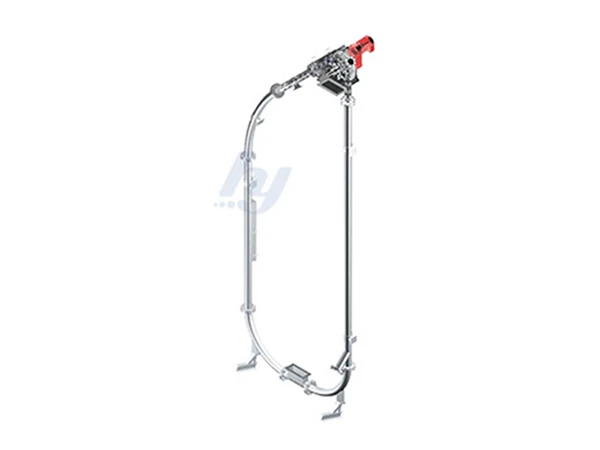
Designing a tubular chain conveyor involves more than pipe diameter; it requires coordination among chains, discs, bends, drive units and inlet/outlet structures.
Conveying‑route design carries particular importance.
Conveying Distance and Bend Arrangement
Tubular chain conveyors can realise combined horizontal, inclined and vertical conveying via bends, but more bends do not equate to better performance.
Each additional bend may alter chain running resistance and localised wear. For long‑distance or high‑lift systems, engineers also need to assess chain tension, drive load and equipment operating conditions.
A dependable manufacturer shall propose a rational conveying route according to site layout and explain the reasoning for the quantity and arrangement of selected bends.
Conveying Capacity and Drive Configuration
The actual conveying capacity of a tubular chain conveyor is affected by pipe diameter, disc geometry, chain speed, material filling ratio and bulk density.
Buyers should not judge equipment suitability solely based on the maximum throughput quoted by manufacturers.
Of greater importance are: what material and conveying route correspond to the quoted conveying capacity, and whether the equipment can operate continuously under target working conditions.
For complex projects, you may request manufacturers to provide key design parameters and the basis for drive‑unit selection.
Inlet and Outlet Structure Design
Inlet position, feeding method and discharge structure also influence equipment operation.
Uneven feeding or overloading beyond design capacity may trigger localised material accumulation, increased chain load and even blockages.
For systems with multiple inlets or outlets, confirm operating modes under varied working conditions and measures to prevent unintended material build‑up.
Experienced manufacturers should not only demonstrate how equipment can be installed, but also elaborate on the rationale behind their design choices.
Inspect Manufacturing Quality of Key Components: Chains, Discs and Bends
Long‑term operational performance of tubular chain conveyors is closely tied to the structure and manufacturing quality of critical components.
Buyers may focus on the following aspects during manufacturer evaluation:
3.1 Chain
Chains perform traction and motion transmission and must withstand mechanical loads generated during operation.
Buyers may enquire about chain material, structure, connection method and applicable load, and verify whether manufacturers have addressed chain wear, elongation and tension‑adjustment requirements.
Chain selection is especially vital for long‑distance or heavy‑duty conveying projects.
3.2 Discs
Discs propel materials inside pipes. Their dimensions, material and clearance fit with pipe walls determine conveying performance.
Different materials call for different disc configurations.
For instance, abrasive materials demand high disc wear resistance; for materials requiring particle integrity, assess disc structure, operating speed and stress exerted on particles.
Buyers should also confirm ease of disc replacement and long‑term availability of spare parts of matching specifications.
3.3 Bend
Bends represent high‑priority components within tubular chain conveying systems.
Chains and discs come into contact and generate friction against inner pipe walls when passing through bends. Localised wear becomes more severe for highly abrasive materials.
Accordingly, pay attention to bend material, bending radius, fabrication quality and maintainability.
3.4 Drive and Tensioning Device
Drive units must match actual conveying loads, and tensioning mechanisms shall satisfy requirements for normal chain operation and maintenance adjustment.
Buyers may ask manufacturers to explain the basis for drive‑unit configuration and specify procedures for inspecting and adjusting chain tension after prolonged equipment operation.
These granular details are more valuable than generic claims of "premium‑grade components".
Does the Manufacturer Have Practical Processing and Quality‑Control Capabilities?
Buyers cannot judge a manufacturer's production capacity merely from factory photos or promotional videos on websites.
A more effective approach is to clarify which manufacturing procedures are performed in‑house and how product quality is controlled.
For tubular chain conveyors, focus on pipe fabrication, bend production, chain‑and‑disc assembly, drive‑unit installation and complete‑machine inspection.
For example, smooth pipe‑joint connections, reasonable fit between discs and pipes, and drive‑component installation complying with design specifications all impact equipment performance.
Buyers may request real‑world production photographs, displays of key components, assembly records or factory‑acceptance inspection documents from suppliers.
Where feasible, conduct virtual factory audits or third‑party inspections to further verify manufacturing and quality‑control practices.
Note that some manufacturers outsource motors, reducers, chains and other parts. Outsourcing itself does not indicate inferior product quality. What matters is whether suppliers enforce clear procurement standards, incoming‑quality checks and assembly‑control workflows.
Does the Manufacturer Possess Project Experience Similar to Your Working Conditions?
A manufacturer's years in business do not fully reflect its understanding of a specific material or conveying scenario.
For tubular chain‑conveyor procurement, relevant project experience carries greater reference value.
If you need to convey abrasive mineral powder, for example, focus on whether the manufacturer has solved comparable wear‑related challenges. If handling fragile particles, verify relevant material‑conveying track records.
Buyers may enquire with manufacturers about:
- Whether they have completed projects conveying comparable materials.
- Conveying distance, lifting height and target throughput of those projects.
- Actual conveying routes implemented.
- Whether problems such as material accumulation, wear or drive overload were encountered.
- Whether equipment adjustments were performed post‑commissioning.
Authentic project cases do not require disclosure of client names or commercial information.
Even material types, key working‑condition parameters, equipment configurations and project photos can help buyers evaluate real‑world supplier competence.
For projects with special requirements where manufacturers lack directly‑relevant case histories, further discuss the feasibility of material testing or other technical‑validation measures.
Can the Manufacturer Meet Equipment Customisation and Production‑Line‑Integration Requirements?
In real‑world industrial projects, tubular chain conveyors seldom operate independently; they connect feeding, storage, mixing, metering, packaging and other production stages.
Consequently, customisation and system‑matching capabilities constitute key evaluation criteria.
Retrofit projects at existing plants, for example, may require routing equipment around columns, pipelines and other production machinery. Varying inlet‑outlet positions may also necessitate adjustments to conveying routes and interface structures.
For such projects, manufacturers shall deliver structural‑design proposals based on site layout drawings and equipment interface documentation.
Buyers also need to confirm compatibility between the conveyor and existing silos, feeding stations, valves and other production equipment.
For food‑grade, chemical or other projects with special requirements, explicitly define wetted‑part material specifications, cleaning requirements, sealing methods and relevant safety criteria.
Customisation is more than resizing equipment; it means building hardware that truly adapts to production processes and site constraints.
Are After‑Sales Support and Spare‑Parts Supply Reliable?
Tubular chain conveyors are mechanical conveying equipment. After long‑term operation, chains, discs, bends and other components require inspection, adjustment or replacement.
Spare‑parts availability and technical support are particularly critical for overseas buyers.
Prior to contract signing, confirm the following items:
- Spare‑parts supply: Whether consumable spares such as chains, discs and seals can be purchased separately, with clear specifications and part identifiers.
- Maintenance documentation: Provision of operation manuals, service handbooks, spare‑parts lists and necessary installation drawings.
- Technical support: Availability of remote guidance for abnormal noise, chain‑tension issues, throughput reduction or drive overload.
- Delivery and warranty: Clear definition of delivery scope, warranty terms, liability for wear‑prone parts and protocols for resolving after‑sales issues.
Especially for continuous‑production lines, buyers may procure a certain stock of critical spares in advance according to equipment operating intensity to mitigate downtime risks caused by waiting for replacement components.
Compare Proposal Completeness Rather Than Quotation Alone
Quotations for tubular chain conveyors from different manufacturers can differ substantially.
Price gaps do not necessarily mean certain suppliers over‑quote.
Two quotations, for instance, may adopt different pipe materials, chain grades, disc materials, drive‑unit specifications and control configurations, and may cover varying scopes of installation accessories and spare parts.
Buyers must verify whether quotations are prepared against identical technical specifications.
Focus on checking whether the quotation includes the main conveyor unit, pipes and bends, drive assemblies, inlet/outlet interfaces, control systems, spare parts, technical documentation, packaging and transportation.
For complex conveying systems, also clarify costs for installation & commissioning, on‑site technical support and other potential charges.
Beyond upfront purchase cost, evaluate long‑term operating expenses.
A piece of equipment with a low purchase price may incur higher total cost of ownership if key components wear rapidly, maintenance proves difficult or spare‑parts lead times are lengthy.
Therefore, select manufacturers based on comprehensive assessment of technical proposals, equipment configurations, delivery scope and follow‑up services, instead of simply choosing the lowest bid.
What Information Should You Prepare Before Enquiring with Manufacturers?
To obtain accurate technical proposals and quotations, buyers are recommended to prepare the following information in advance:
| Item | Recommended Information to Provide |
|---|---|
| Material Information | Material name, bulk density, particle size, moisture content and flowability |
| Conveying Capacity | Target hourly throughput |
| Conveying Distance | Horizontal distance, lifting height and expected conveying route |
| Inlet‑Outlet Requirements | Quantity, positions and interface dimensions of inlets and outlets |
| Operating Conditions | Daily operating hours; continuous or intermittent operation |
| Site Layout | Equipment‑layout drawings, installation space and surrounding obstacles |
| Special Requirements | Wear resistance, hygiene, cleaning, dust‑proofing and applicable safety specifications |
| Project Requirements | Delivery lead time, destination, technical documentation and other service requirements |
If complete material parameters are unavailable, describe actual production processes and provide material samples or relevant technical datasheets.
For hard‑to‑convey materials, discuss targeted conveying testing before finalising equipment configurations.
Summary: Core Capabilities of a Reliable Tubular Chain Conveyor Manufacturer
When choosing a tubular chain‑conveyor manufacturer, do not focus merely on extensive product catalogues, similar‑looking equipment appearance or attractive quotations.
What truly matters is whether the supplier can understand material and process requirements, rationally design conveying routes, select appropriate chains, discs and drive configurations, and guarantee equipment performance through manufacturing quality control and after‑sales support.
Buyers may assess manufacturer suitability by answering three key questions:
- Can the manufacturer explain the reasoning behind its equipment design?
- Can it provide manufacturing documentation, technical justifications or real‑world cases relevant to your project requirements?
- After equipment delivery, can it supply necessary maintenance documents, spare parts and technical support?
Clear and concrete answers to these questions will help buyers better evaluate supplier fit for their projects.
Find the Right Tubular Chain Conveyor Supplier for Your Project
If you are planning a powder or bulk‑material conveying system, Hanye can discuss tubular‑chain‑conveyor model selection and configuration proposals based on your material characteristics, target throughput, conveying distance and site‑layout constraints.
Please share your material information, production processes and project requirements to get further tailored solutions for your production‑line conveying equipment.