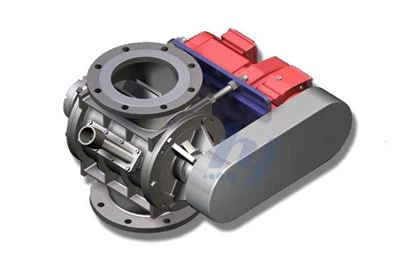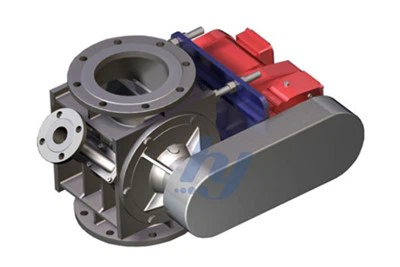

The knife gate valve-also known as a knife-type gate valve, knife valve, slurry valve, or mud valve-utilizes a gate plate as its opening and closing component. The direction of the gate plate's movement is perpendicular to the direction of fluid flow. It functions by employing a knife-edged gate plate-capable of shearing through fibrous materials-to cut off the flow of the medium. The gate plate features two sealing surfaces; in the most common configuration, these two surfaces form a wedge shape. The wedge angle varies depending on the specific valve parameters, typically measuring 5 degrees. The gate plate in a wedge-type knife gate valve can be manufactured as a single, solid piece-referred to as a "rigid gate plate"-or it can be designed to allow for slight deformation. This flexibility improves manufacturability and compensates for any angular deviations in the sealing surfaces that may arise during the machining process; such a gate plate is termed an "elastic gate plate." The valve body itself effectively lacks an internal cavity; instead, the gate plate rises and falls within lateral guide slots and is pressed firmly against the valve seat by lugs located at the bottom of the valve. For applications requiring a higher degree of medium tightness, an O-ring sealed seat option is available to achieve bi-directional sealing. Knife gate valves are characterized by their compact installation footprint, suitability for low-pressure applications, resistance to debris accumulation, and relatively low cost.
When a knife gate valve is in the closed position, the sealing surfaces can rely solely on the pressure of the medium to achieve a seal-a mechanism known as "self-sealing." In this mode, the medium's pressure forces the gate plate's sealing surface against the valve seat on the opposite side, thereby ensuring a tight seal. However, most gate valves employ "forced sealing"; that is, when the valve is closed, an external force is required to firmly press the gate plate against the valve seat to guarantee the integrity of the seal. Valves of this type should generally be installed in a vertical orientation within the pipeline system.
Knife Gate Valve Actuation Methods: Manual operation, chain wheel, electric motor, pneumatic actuator, hydraulic actuator, bevel gear, electro-hydraulic control, and gas-hydraulic control, among others. Knife Gate Valve Stem Configurations: Rising stem (OS&Y) and non-rising stem (NRS). Knife Gate Valve Materials: Cast iron, cast steel, carbon steel, stainless steel, fluorocarbon-lined materials, etc.
Knife Gate Valve Sealing Types: Hard sealing (metal-to-metal), soft sealing (resilient), single-sided sealing, and double-sided sealing, utilizing various sealing materials. Ultra-thin knife gate valves, distinguished by their compact size, low flow resistance, light weight, and ease of installation and removal, have effectively resolved the persistent issues-such as high flow resistance, excessive weight, installation difficulties, and large spatial footprints-typically associated with conventional valves, including standard gate valves, slab gate valves, ball valves, globe valves, control valves, and butterfly valves. Since the advent of the knife gate valve, it has replaced a vast number of general-purpose shut-off and control valves. Globally, the United States and Japan represent the largest consumers of knife gate valves.