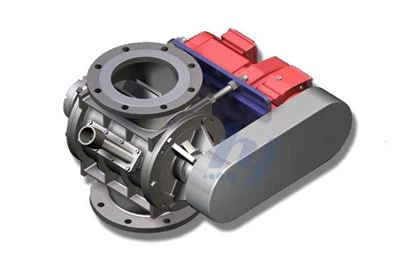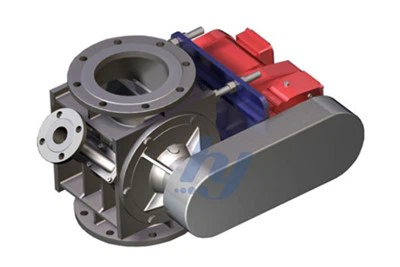

In powder and bulk‑solid handling systems, knife gate valves are commonly installed between silos, hoppers, discharging equipment or conveying pipelines for material isolation, equipment maintenance and process switching.
Although their structure appears relatively simple, valve selection cannot be based solely on nominal diameter. Powder flowability, particle size, abrasiveness, working pressure, temperature and valve installation location all affect actual service performance.
For procurement personnel, the real question is not "can knife gate valves be used for powder", but "is this knife gate valve suitable for my material and working conditions?"
Why Knife Gate Valves Are Widely Used for Powder and Bulk Solids
Knife gate valves adopt a relatively thin gate plate, which opens and closes the material passage by vertical movement.
Compared with conventional gate valves mainly intended for clean fluids, knife gate valves are better suited for media containing powder, particles or solid components. When fully open, they provide a straight‑through material passage, and are therefore widely applied in:
- Outlets of powder silos and hoppers
- Bulk‑material discharging systems
- Upstream and downstream of pneumatic conveying equipment
- Upstream of rotary airlock valves
- Dust collector hoppers
- Powder and particle production lines
Nevertheless, knife gate valves primarily perform opening, closing and isolation functions.
If the system requires continuous metered feeding, air‑locking or stable flow regulation, auxiliary equipment such as rotary airlock valves or feeders shall be deployed instead of relying solely on knife gate valves.
Step 1: Characterize the Material Before Confirming Valve Nominal Diameter
Powders and bulk solids vary greatly in properties.
Even if two projects use piping of identical size, they may not adopt identical knife gate valves.
Before valve selection, confirm the following material characteristics.
1. Powder or granular material?
Fine powder tends to penetrate sealing zones and may cause dust emission.
Larger particles may become trapped during gate‑plate closure, resulting in incomplete shut‑off.
Therefore, particle size and particle morphology influence seat structure, sealing type and gate‑plate operation.
2. Flow behaviour
Some materials discharge freely under gravity, while certain fine powders are prone to compaction, caking or bridging.
For poorly flowable powders, material may exert greater resistance against the gate plate during valve closure.
Under such conditions, besides valve structure, silo design and upstream discharging status should also be considered.
3. Abrasiveness
Mineral powders, certain chemical powders and other hard particles may continuously abrade the gate plate, valve seat and internal valve body.
When handling such materials, pay close attention to:
- Gate‑plate material
- Valve‑seat material
- Material‑contact zones
- Serviceability of wear‑prone components
Focusing merely on initial purchase price while ignoring wear may lead to higher long‑term maintenance costs.
4. Tendency for adhesion or moisture absorption
Adhesive powders may accumulate on the gate plate and near valve seats, impairing normal opening and closing over time.
For sticky, moisture‑sensitive and caking‑prone materials, special attention shall be paid to internal material accumulation risk and ease of on‑site cleaning.

Step 2: Confirm the Installation Location within the System
The same valve performs different duties depending on its installation position.
Silo or hopper outlet
Installed at silo bottoms, knife gate valves control material discharge and provide isolation for downstream equipment maintenance.
This application requires consideration of static pressure exerted by overlying material and reliable gate‑plate closure under high fill‑level conditions.
Upstream of rotary airlock valves
This is a typical configuration in powder‑handling systems.
The knife gate valve isolates the silo from the rotary airlock valve. When maintenance, cleaning or replacement of the rotary airlock valve is required, the knife gate valve can be closed to avoid full silo emptying.
Note that the two pieces of equipment serve distinct purposes: The knife gate valve provides isolation; the rotary airlock valve delivers continuous discharge or air‑locking.
They cannot substitute for one another.
Between conveying equipment
Knife gate valves can also be fitted between process equipment for shutdown isolation, equipment switching and maintenance.
For frequently cycled valves, automated actuators and cycle life shall be further evaluated.
Beneath dust‑collection equipment
Beneath dust collector or dust hoppers, knife gate valves provide dust isolation and enable equipment maintenance.
These applications require consideration of dust fineness, material accumulation and sealing‑zone susceptibility to dust contamination.
Step 3: Select Structure According to Pressure and Sealing Requirements
Powder systems are not always operated at atmospheric pressure.
For instance, some pneumatic conveying systems work under positive pressure, negative pressure or differential pressure.
Accordingly, the following shall be clearly defined during procurement:
- Normal working pressure
- Maximum possible differential pressure
- Whether gas‑tight isolation is required
- Acceptable leakage level
For ordinary silo discharge applications, sealing requirements may be moderate.
For conveying systems under differential pressure, valve seat and sealing structures demand greater attention.
Important note: The ability of a knife gate valve to shut off material flow does not guarantee full gas tightness under all operating conditions.
Where projects impose strict limits on gas leakage, dust escape or vacuum retention, communicate these requirements to suppliers at the inquiry stage.
Step 4: Select Body, Gate‑Plate and Sealing Materials Based on Process Media
Material selection for knife gate valves cannot be simplified as "carbon steel for low cost, stainless steel for better performance".
General powders and granules
For non‑corrosive bulk solids at moderate temperatures, cost‑effective material options may be adopted according to actual working conditions.
Corrosive media
For corrosive powders, verify compatibility of valve body, gate plate and sealing components with the process medium.
Replacement of valve‑body material alone may be insufficient; all wetted parts shall be assessed comprehensively.
Food‑grade, pharmaceutical and hygienic‑critical media
For these applications, corrosion resistance is required alongside considerations such as:
- Wetted‑part material specification
- Internal product retention
- Cleanability
- Surface finish
- Risk of cross‑contamination
Communicate specific hygienic requirements to suppliers instead of simply requesting "stainless‑steel valves".
Step 5: Manual, Pneumatic or Electric Actuation?
Actuator selection depends mainly on cycling frequency and automation requirements.
Manual
Suitable for infrequently operated isolation points accessible to operators for maintenance purposes.
Advantages include simple construction with no additional air supply or electric actuator needed.
Pneumatic
Suited for highly automated powder production lines with frequent valve cycling.
Where stable plant compressed‑air supply is available, pneumatic actuators integrate readily with PLCs, solenoid valves and position feedback devices.
Electric
Selected for remote‑control applications where compressed‑air supply is unavailable on‑site.
Regardless of actuator type, specify actuators according to actual valve resistance and service conditions, rather than matching actuators purely to valve nominal diameter.
Common Selection Pitfalls in Powder‑Handling Applications
Pitfall 1: Providing suppliers only with valve nominal diameter
A requirement for "a DN200 knife gate valve" provides insufficient information.
At minimum, furnish material properties, pressure, temperature, installation location and actuation type.
Pitfall 2: Assuming knife gate valves can replace all discharging equipment
Knife gate valves excel at isolation but are not designed for continuous feeding duties.
For stable, continuous discharge, specify dedicated feeding equipment in accordance with system requirements.
Pitfall 3: Treating stainless steel as the universal optimal choice
Material selection shall balance corrosion resistance, wear resistance, hygienic demands and cost.
Specifying higher‑cost materials cannot compensate for mismatches between valve structure and process conditions.
Pitfall 4: Ignoring material entrapment
Granular or compacted powders may lodge within the gate‑plate travel path during closure.
Communicate tendencies for material trapping, caking or accumulation during the selection phase.
Pitfall 5: Comparing only purchase cost
For long‑running powder‑handling systems, maintenance and downtime costs are equally important.
During procurement, also evaluate:
Ease of seal replacement
Accessibility for gate‑plate inspection
Long‑term availability of wear‑prone spare parts
Whether extensive disassembly is required for servicing
Recommended Parameters to Prepare Before Procurement
Provide the information below to help suppliers deliver accurate proposals:
| Item | Recommended information to provide |
|---|---|
| Material | Name; powder or granular form |
| Particle size | Approximate range |
| Flow behaviour | Susceptibility to caking, adhesion, bridging |
| Abrasiveness | Mild or highly abrasive |
| Temperature | Normal and maximum operating temperature |
| Pressure | Positive pressure, negative pressure or atmospheric pressure |
| Valve size | Piping or equipment connection dimension |
| Installation location | Silo, conveying pipeline, discharging equipment, etc. |
| Cycle frequency | Occasional, multiple cycles per day, or continuous automatic operation |
| Actuation type | Manual, pneumatic or electric |
| Special requirements | Dust containment, corrosion resistance, hygienic standards, clean‑in‑place capability, etc. |
For replacement projects, supply on‑site photographs, installation dimensions and drawings of the original valve whenever possible.
How to Evaluate the Appropriateness of Supplier Proposals
A competent supplier will not merely ask "what nominal diameter do you require?"
Meaningful technical discussions shall cover:
- Process material being handled
- Valve installation position
- Functional objective for the valve
- System pressure conditions
- Cycling frequency
- Sealing requirements
- Wear or corrosion concerns
If a supplier can justify recommended valve body, sealing and actuator configurations based on these operating parameters, the proposal is generally more valuable than standard‑model selections without application context.
Conclusion
Although knife gate valves appear to be simple on‑off components within powder and bulk‑solid systems, they occupy critical interfaces between silos, conveying equipment and production processes.
Instead of comparing only nominal diameter, material grade and price during selection, clarify three core questions first:
- What material is being handled?
- Where will the valve be installed?
- What functions must the valve fulfil?
Based on these fundamentals, specify sealing, materials and actuation. This approach helps mitigate later‑stage issues such as jamming, incomplete shut‑off, accelerated wear and difficult maintenance.
For powder‑handling projects, the optimum knife gate valve is not necessarily the highest‑specification option, but the one reliably matched to actual process material and overall system conditions.
Selecting Suitable Knife Gate Valves for Your Powder‑Handling System
Different powders and bulk solids impose distinct requirements on knife gate‑valve construction, materials, sealing and actuation. If you are selecting knife gate valves for silos, conveying systems or process equipment, please provide us with information including material name, particle‑size range, operating temperature, pressure, valve size and installation location. Drawing on field‑proven operating conditions, Hanye can assist you in defining appropriate product configurations and reduce problems such as jamming, wear, leakage and high maintenance workload arising from improper selection.
Contact us for knife gate‑valve selection advice and quotations.