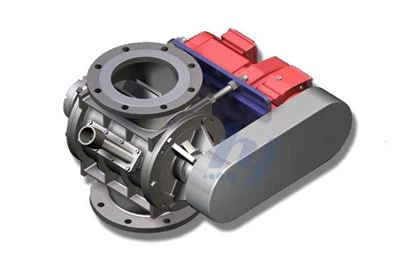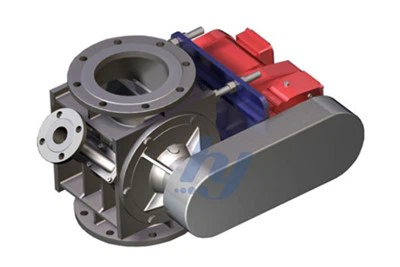

In industrial fluid control systems, diverter valves are critical equipment used to alter the flow direction of media, widely applied in pneumatic conveying, chemical engineering, food processing, pharmaceutical manufacturing, water treatment and industrial automation systems.
Classified by internal switching structures, diverter valves have multiple mainstream designs, among which plug-type and ball-type diverter valves are two common options for industrial applications.
Although both can realize media flow diversion, their structural principles lead to distinct disparities in sealing performance, applicable media, pressure ratings, maintenance requirements and application scenarios.
For equipment manufacturers, engineering companies and industrial purchasers, understanding the differences between these two diverter valves helps select more reliable and cost-effective solutions tailored to actual working conditions.
What Is a Diverter Valve?
A diverter valve is an industrial valve device that controls the flow direction of materials or fluids.
Different from standard on-off valves, its core function is not merely opening or closing pipelines, but switching flow paths between multiple outlets, such as:
- Distributing media from one inlet to two separate outlets
- Converging flow from two inlets into a single outlet
- Rerouting conveying lines according to production demands
Installed between conveying pipelines, silo outlets, pneumatic conveying systems or production equipment, diverter valves enhance system flexibility and automation in industrial production.
Common Application Scenarios
- Powder and granular material conveying systems
- Cement, mineral powder and coal dust processing
- Food powder production
- Pharmaceutical production lines
- Chemical raw material transportation
- Gas and liquid pipeline control
What Is a Plug-Type Diverter Valve?
The plug-type diverter valve features a rotary plug structure. Flow diversion is achieved by rotating the plug spool to realign internal flow channels.
Its core components include:
- Valve Body
- Rotating Plug
- Sealing System
- Actuator
When the actuator drives the plug to rotate, internal flow passages connect with different outlets to complete flow switching.

Main Advantages of Plug-Type Diverter Valves
1. Simple and Reliable Structural Design
The plug structure contains no complicated internal moving parts, delivering high mechanical reliability. This design is ideal for continuous industrial operation and reduces failure risks.
2. Suitable for Powder & Granular Material Conveying
The internal flow channel maintains a large flow area, making plug-type diverter valves perfect for handling:
- Fine powders
- Granules
- Mineral materials
- Grains
- Plastic pellets
They effectively mitigate material blockages, especially in pneumatic conveying systems.
3. Superior Wear Resistance
For industrial powder applications, plug-type diverter valves are commonly equipped with:
- Wear-resistant alloy materials
- Special protective coatings
- Reinforced sealing assemblies
This enables stable operation under working conditions with abrasive particles.
Limitations of Plug-Type Diverter Valves
Despite strong industrial adaptability, plug-type diverter valves have certain drawbacks:
- High precision requirements for sealing assembly
- Wear may occur between the plug and valve seat after long-term operation
- Special customized designs are required for high-temperature and high-pressure fluid service
What Is a Ball-Type Diverter Valve?
The ball-type diverter valve adopts a spherical spool design. Rotating the ball to adjust the orientation of its internal through-channel changes the media flow path.
Its operating principle is similar to standard ball valves: a 90° rotation of the spherical spool redirects internal passages to guide media toward different outlets.
Key structural parts:
- Valve Body
- Ball Spool
- Valve Stem
- Seat Seal
- Actuator

Main Advantages of Ball-Type Diverter Valves
1. Excellent Sealing Performance
The biggest merit of ball-type designs lies in outstanding sealing capacity. Tight contact between the ball and valve seat effectively minimizes:
- Medium leakage
- Backflow
- Pressure loss
Thus they are preferred for applications with stringent sealing standards.
2. Low Flow Resistance
Ball-type diverter valves feature straight-through internal flow channels. When fully open:
- Fluid flow resistance is minimal
- Pressure drop remains low
- System energy consumption is reduced
This characteristic makes them ideal for continuous liquid and gas fluid control systems.
3. Easy Integration with Automated Control
Ball-type diverter valves are highly compatible with:
- Pneumatic actuators
- Electric actuators
- Intelligent control systems
They are extensively deployed in automated production environments.
Limitations of Ball-Type Diverter Valves
Ball-type diverter valves also have inherent disadvantages:
- More complex construction compared to standard plug-type valves
- Prone to abrasion when handling media with high solid particle content (special modification is needed)
- Higher initial procurement cost
Key Comparison: Plug-Type vs Ball-Type Diverter Valves
|
Comparison Item |
Plug-Type Diverter Valve |
Ball-Type Diverter Valve |
|---|---|---|
|
Core Structure |
Rotary plug spool |
Spherical ball spool |
|
Working Mechanism |
Rotate plug to reorient flow channels |
Rotate ball to switch internal passages |
|
Core Strengths |
Robust, durable, optimized for powder materials |
Premium sealing, low flow resistance |
|
Applicable Media |
Powders, granules, dry bulk materials |
Liquids, gases, clean media |
|
Wear Resistance |
Strong |
Average; customized coating required for abrasive media |
|
Sealing Capacity |
Good |
Excellent |
|
Flow Control Focus |
Direction switching priority |
Precise flow regulation priority |
|
Maintenance Demand |
Low |
Regular inspection of sealing components required |
|
Overall Cost |
Generally economical |
Relatively high |
How to Choose Between Plug-Type and Ball-Type Diverter Valves
There is no universally superior diverter valve type; selection must be based on specific working conditions. The following critical factors should be prioritized during procurement:
1. Selection Based on Media Type
Powder & Granular Materials – Recommended: Plug-Type Diverter Valve
Applicable media examples:
- Cement powder
- Lime powder
- Plastic pellets
- Grains
- Chemical fine powders
Reason: The plug structure better accommodates particle-laden media and lowers clogging risks.
Liquid & Gaseous Media – Recommended: Ball-Type Diverter Valve
Applicable media examples:
- Water
- Industrial chemical liquids
- Process gases
- Liquid process fluids
Reason: Ball-type construction delivers superior leak-tight sealing performance.
2. Selection Based on Pressure & Temperature Requirements
Systems with the following operating parameters should prioritize ball-type valves or specially engineered plug-type diverter valves:
- High operating pressure
- High-temperature environments
- Strict zero-leakage specifications
3. Selection Based on Long-Term Maintenance Costs
For production lines running continuously year-round: Plug-type diverter valves offer:
- Simplified structure
- Easy maintenance
- Extended service life
Ball-type diverter valves are more suitable for systems with:
- High automation levels
- Strict flow control accuracy requirements
- Rigorous sealing standards
Conclusion
Both plug-type and ball-type diverter valves are mainstream diversion solutions for industrial systems, yet they are engineered for distinct operating environments.
Choose Plug-Type Diverter Valves If Your System Primarily Handles:
- Fine powders
- Granular bulk materials
- Pneumatic conveying workflows
And your core priorities are wear resistance, operational reliability and low long-term running costs.
Choose Ball-Type Diverter Valves If Your System Primarily Controls:
- Liquids
- Gases
- Media requiring high sealing integrity
And your core priorities are leakage prevention and optimized fluid transmission efficiency.
Industrial purchasers and engineering project teams must comprehensively evaluate media characteristics, pressure-temperature operating conditions, cycling frequency and maintenance requirements to select the optimal diverter valve.
A properly matched diverter valve not only boosts the stability of production systems, but also cuts overall long-term operational expenses.