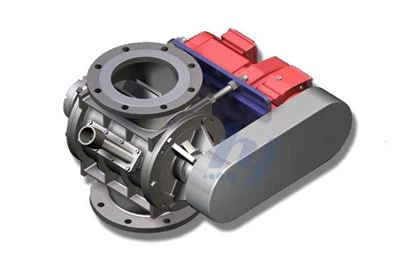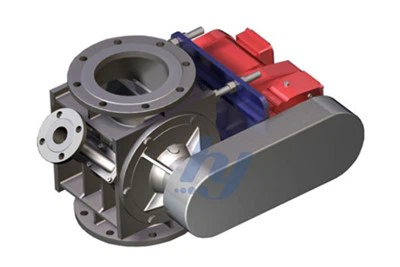

Knife‑gate valves are widely used in conveying and discharge systems for powders, granules, slurries and media containing solid particles. While they appear simple in construction, valve selection during procurement involves far more than just confirming the nominal diameter.
Even for knife‑gate valves of the same DN200 size, the required valve body material, sealing configuration and actuation method can be completely different when applied to ordinary plastic granules, abrasive powders, or slurries under pressure. Improper initial selection seldom results in a valve that fails to open; more frequent issues include material trapping, leakage, rapid gate plate wear, and even disruption to the stable operation of the entire production line.
Accordingly, when purchasing a knife‑gate valve, it is critical to first clarify operating conditions before finalizing technical specifications.
Identify the Medium: What Exactly Will the Valve Isolate?
The first step of selection is not checking dimensions, but analysing the process medium.
Essential information to confirm includes:
- Whether the medium is powder, granule or slurry
- Approximate particle size of the material
- Tendency for caking, adhesion or bridging
- Presence of abrasiveness or corrosiveness
- Sanitary, clean‑service or anti‑contamination requirements
For example, ordinary plastic granules have relatively good flow properties, and the primary function of the valve is reliable shut‑off. For fine powders, sticky materials or compactable media, greater attention must be paid to the gate shearing capability and risk of material accumulation within the sealing zone.
When handling highly abrasive powders, standard designs will suffer rapid wear on the gate plate or seat. Material specification and sealing design must therefore be carefully evaluated.
When sending enquiries to suppliers, avoid simply requesting "a pneumatic knife‑gate valve". Always supply the exact material name and its characteristics.

Confirm Installation Location: Identical Valves for Distinct Functions
Knife‑gate valves can be fitted at silo outlets, underneath hoppers, above rotary discharge valves, or between pieces of conveying equipment.
Installation location imposes different operational demands.
Valves mounted at silo outlets must withstand static load from material above when closed. Units installed upstream of rotary discharge valves mainly serve isolation for maintenance. In automated production lines, frequent cycling is expected, placing higher demands on actuators and service life.
During selection, clearly define three key points: Where will the valve be installed? What is its primary function? Approximately how many open‑close cycles occur per day?
This information is often more valuable than pipe diameter alone.
Determine Construction and Sealing Based on Pressure and Temperature
Many buyers overlook the fact that knife‑gate valves are not suitable for all pressure conditions.
Simple requirements apply for gravity discharge from atmospheric silos. For positive‑pressure or negative‑pressure conveying systems, actual working pressure and differential pressure must be specified.
Particularly in pneumatic conveying systems where gas‑tight isolation is required, performance is judged not only by full closure but also by leakage control in the closed position.
Temperature is equally important.
High‑temperature media shorten the service life of common rubber seals. Low‑temperature service, corrosive fluids and special chemical media may require alternative sealing materials.
Before procurement, provide at least the parameters below:
| Selection Parameter | Details to Confirm |
|---|---|
| Working Pressure | Atmospheric, positive pressure or negative pressure |
| Maximum Differential Pressure | Pressure difference across the closed valve |
| Operating Temperature | Normal and maximum process temperature |
| Sealing Requirement | General shut‑off, or enhanced gas‑tight / dust‑tight performance |
These parameters directly govern valve construction and sealing solutions.
Valve Body and Gate Plate Material: Do Not Base Decisions Purely on Cost
Common materials for knife‑gate valves include carbon steel and stainless steel. Stainless steel is not universally superior to carbon steel.
Material choice is driven mainly by process medium and service environment.
For non‑corrosive bulk solids, cost‑effective material options can be adopted. Applications involving corrosive media, food processing, chemical processes or lithium‑ion battery materials with high cleanliness requirements generally call for stainless steel or other suitable alloys.
For abrasive materials, special focus should be placed on wear resistance of the gate plate and all wetted components.
During procurement, specify valve‑body material and gate‑plate material separately. A valve does not require identical material for every component.
Manual, Pneumatic or Electric Actuation: Prioritise Cycle Frequency over Sophistication
Three main actuation types are available: manual, pneumatic and electric.
Suitable for infrequent cycling where on‑site manual operation is feasible.
For example, maintenance‑isolation valves that operate only a few times annually do not justify the extra expense of pneumatic or electric automation.
Ideal for high‑cycle automated production lines.
Pneumatic actuators deliver fast response and integrate readily with PLC systems and limit switches, making them widespread in powder conveying and automatic batching systems. A stable compressed‑air supply on‑site is a prerequisite.
Used for remote control where compressed air is unavailable, or for direct integration into electrical control systems.
Instead of comparing prices only, select actuation based on cycle frequency, control philosophy and available site utilities.
Address Material Trapping and Build‑up in Sealing Zones
A core challenge for knife‑gate valves in powder and granule service is material ingress into the gate and sealing region during closure.
Large, compactable particles or cycling under high material head can lead to incomplete shut‑off, seal degradation and even gate jamming.
This explains why two visually similar knife‑gate valves can deliver vastly different real‑world performance.
For such operating conditions, verify with suppliers whether design considerations cover:
- Risk of material entering the seat area
- Solutions for material entrapment upon gate closure
- Accessibility for seal inspection and replacement
- Availability of separate replacement wear parts
For long‑term reliable operation, optimal performance comes not from over‑complicated construction, but from design matched to material properties.
Parameters to Provide Suppliers Prior to Purchase
To receive accurate selection recommendations, furnish the following information in one submission:
- Medium name
- Medium type (powder, granule or slurry)
- Particle‑size range
- Operating temperature
- Working pressure
- Valve nominal size
- Installation location
- Open‑close cycle frequency
- Actuation requirement: manual / pneumatic / electric
- Corrosion, abrasion or cleanliness requirements
When replacing existing valves, also submit original dimensional drawings, connection dimensions or site photographs to minimise installation mismatch risks.
Conclusion
When selecting a knife‑gate valve, the objective is not to find "the best valve overall", but the configuration best suited to your actual operating conditions.
Simple designs may suffice for basic silo isolation. Automated powder‑conveying systems demand comprehensive evaluation of medium characteristics, pressure ratings, sealing performance, cycle frequency and compatibility with upstream and downstream equipment.
Thorough definition of process parameters before procurement lowers risks of material jamming, leakage, wear and installation incompatibility.
If you are sourcing knife‑gate valves for powder, granule or bulk‑material handling systems, share medium properties, operating temperature, pressure, valve size and installation position with your supplier. Define valve‑body, sealing and actuation solutions according to real‑world service conditions, rather than choosing purely based on nominal diameter and purchase price. Contact us immediately