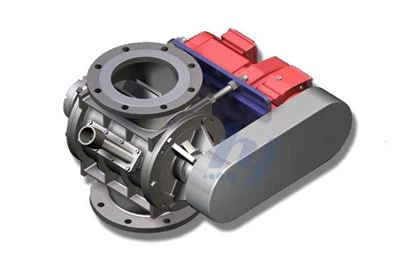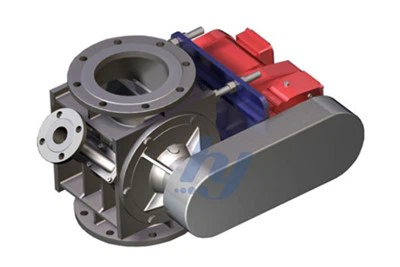

In pneumatic conveying and powder handling systems, a rotary airlock valve not only meters material flow but, more importantly, maintains system airtightness and prevents pressure leakage. Poor selection can reduce conveying efficiency, and in severe cases, lead to system blockages, equipment wear, or even safety risks.
For procurement professionals and engineers, the real challenge is not just sourcing a valve, but selecting the right one. This guide covers application conditions, key parameters, structural design, and industry best practices to clarify the selection logic for rotary airlock valves.
What Are Your Operating Conditions?
Different working conditions impose vastly different requirements on rotary airlock valves. Before selection, evaluate the following aspects carefully.
1. Type of Conveying System
- Positive pressure conveying
- Negative pressure conveying
- Gravity discharge
Air tightness requirements vary by system. For example, negative pressure systems demand higher sealing performance to avoid external air ingress, which disrupts conveying stability.
2. Material Characteristics (The Most Critical Factor)
Focus on these key properties:
- Particle size (powder / granular / lumpy)
- Flowability (prone to bridging or not)
- Abrasiveness (e.g., silica powder, mineral powder)
- Adhesiveness (e.g., sugar powder, chemical powder)
- Moisture content, temperature, and corrosiveness
Examples:
Highly abrasive materials require wear-resistant construction or special materials.
Sticky materials need anti-stick design or self-cleaning structures.
3. Industry Application Environment
Different industrial sectors have additional requirements:
Food industry: Compliant with hygiene standards (stainless steel, easy cleaning).
Pharmaceutical industry: High sealing, contamination-free design, and GMP compliance.
Cement/Mining industry: Emphasis on wear resistance.
Chemical industry: Potential ATEX explosion-proof requirements.

Key Selection Parameters for Rotary Airlock Valves
Once operating conditions are defined, evaluate these critical technical parameters.
1. Handling Capacity
- Measured as volumetric flow (m³/h) or mass flow (kg/h, t/h).
- Base selection on actual conveying rate.
- Reserve 10%–20% system margin for future expansion.
- Capacity is determined by rotor volume and rotational speed.
2. Rotor Design
Common types:
- Open rotor
- Closed rotor
- V-type rotor (ideal for sticky, bridging-prone materials with excellent anti-stick performance)
Rotor design directly impacts sealing, cleanability, and material compatibility.
3. Seal Clearance
The gap between rotor and housing affects:
- Airtightness
- Service life and wear rate
General rule:
- Smaller gaps = better sealing.
- Larger gaps = better suitability for highly abrasive materials, reducing jamming and wear.
For high-performance applications, choose airtight or heavy-duty airlock designs.
4. Rotational Speed
Improper speed causes problems:
Too high: Material degradation and accelerated wear.
Too low: Insufficient throughput and material accumulation.
Optimize speed based on material properties, flow rate, and system pressure.
5. Working Pressure
Critical in pneumatic conveying systems:
Typical range: 0.1–1 bar(g); higher for heavy-duty applications.
Ensure valve body and sealing design can withstand system pressure.
Construction and Material Selection: Determine Service Life and Stability
1. Material of Construction
- Carbon steel: General-purpose, cost-effective.
- Stainless steel (304/316L): Food, pharmaceutical, and high-purity applications.
- Wear-resistant coating/alloy: Highly abrasive environments (mining, cement).
2. Wear-Resistant Design
For mineral powder, cement, and similar materials:
- Replaceable wear liners
- Surface hardening treatment
- Ceramic coating or hard alloy spraying
3. Anti-Jamming Design
Solutions for difficult materials:
- Shear blade structure
- Elastic compensation rotor
- Reverse rotation for blockage clearing
Special Requirements: Commonly Overlooked Key Points
1. Explosion-Proof (ATEX)
For explosive dust environments (flour, starch, chemical powder, aluminum powder), confirm ATEX certification.
2. Cleaning and Maintenance
Critical for food/pharmaceutical industries:
- Quick-disassembly structure
- CIP (Clean-in-Place) / SIP (Sterilize-in-Place) capability
- Internal dead-space-free design
3. Drive Type
- Direct-coupled motor
- Gear reduction motor
- Chain/belt drive
Drive selection affects maintenance cost, operational stability, and installation space.
Common Selection Mistakes to Avoid
- Focusing only on price, ignoring application matching.
- Overlooking key material properties (adhesiveness, abrasiveness, flowability).
- Failing to account for future capacity expansion.
- Neglecting sealing requirements, reducing system efficiency.
- Not verifying explosion-proof or food-grade compliance.
These issues often appear 3–6 months after commissioning.
Practical Tips for Fast and Accurate Selection
Provide these details to suppliers for precise recommendations:
- Material type (name + properties: particle size, flowability, abrasiveness, adhesiveness, moisture content)
- Conveying rate (t/h, kg/h, or m³/h)
- System type (positive/negative pressure)
- Working pressure
- Industry (food/chemical/mining, etc.)
- Special requirements (explosion-proof/wear-resistant/hygienic)
Complete information ensures accurate selection.
Conclusion
Selecting a rotary airlock valve is about precise matching between operating conditions and equipment, not just purchasing a product. The ideal valve balances:
- Throughput with system demand
- Airtightness for pneumatic conveying
- Structural design for material characteristics
- Material quality for long-term reliability
Choosing an experienced supplier is more valuable than comparing prices alone.
Get Your Custom Solution
If you are evaluating rotary airlock valve suppliers, contact HANYE technical team today. We provide accurate quotations, professional application advice, and tailored solutions for your specific environment.
Submit your requirements now for a clear, comparable, and technically justified quote to support your confident purchasing decision.